Metal Roof Installation: What Actually Happens
A step-by-step look at install day — the layers, the fasteners, the timeline — plus the honest case for hiring a pro vs. going DIY.
 MetalRoofBasics Editors · Updated Jul 2026 · 8 min read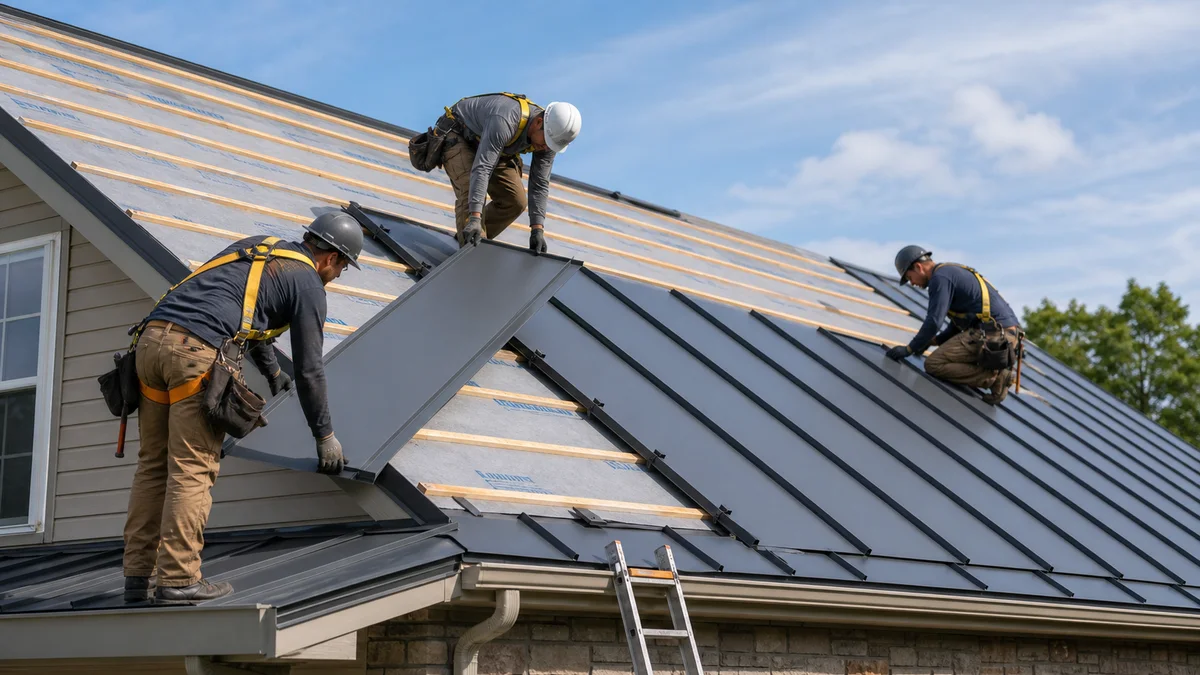
A typical metal re-roof takes a professional crew 2–5 days. The work is layered: tear-off (or go-over), decking check, underlayment, then panels fastened from the eave up, finished with trim and flashing. Done right, it's watertight for decades.
The layers of a metal roof
A metal roof is a system, not just the panels. From the deck up:
Solid plywood or OSB sheathing. Rotten or sagging boards get replaced first.
A synthetic or peel-and-stick membrane — the true waterproof layer under the metal.
Standing seam uses hidden clips; corrugated screws through the face with gasketed screws.
Ridge caps, valleys, and flashing around chimneys and vents — where most leaks are prevented or created.
Install day, step by step
Old shingles are stripped, or — where code allows — the metal goes over one existing layer on furring strips. Tear-off is preferred; it lets the crew inspect the deck.
Damaged sheathing is swapped, then the full underlayment membrane is rolled and sealed.
Panels are cut to length and fastened from the bottom edge upward so each overlaps the one below and sheds water.
Ridge caps and flashing go on, penetrations are sealed, and a magnetic sweep collects stray fasteners from the yard.
Can you install metal over shingles?
Often yes — over a single layer, with furring strips and where local code permits. It saves on tear-off labor and disposal, but you lose the chance to inspect the deck and can trap moisture if it isn't detailed correctly. When in doubt, tear off.
What drives the price
Steep, cut-up roofs with many valleys and dormers cost more to detail.
Standing seam and premium metals run well above corrugated steel.
Removing old layers and replacing rotten sheathing adds labor and disposal.
Local labor rates and hard-to-reach roofs shift quotes significantly.
Labor is the local variable: the same standing-seam roof can quote thousands apart from one metro to the next. For a sense of real-world numbers and permit details in one high-demand market, see this local breakdown of metal roofing costs in Charlotte, NC.
DIY or hire a pro?
DIY can work if…
- It's a simple, low-pitch structure (shed, cabin, porch)
- You're using corrugated exposed-fastener panels
- You're comfortable working at height, safely
Hire a pro when…
- It's your main house or a steep/complex roof
- You want a standing-seam system
- You need the manufacturer & workmanship warranty intact
- A metal roof is a layered system — underlayment and flashing matter as much as the panels.
- Most pro installs take 2–5 days; tear-off beats going over shingles when you can.
- DIY suits simple corrugated projects; leave standing seam and steep roofs to pros.
Still comparing options?
Start with metal vs. shingles.